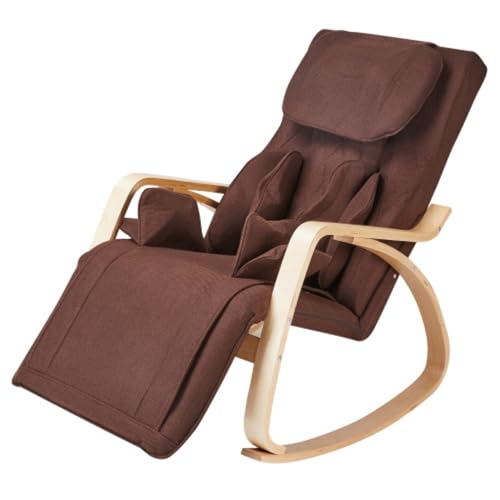
The ottoman and footrest design separates some massage chairs from traditional all-in-one models. Rather than having legs and feet enclosed in an attached leg rest, these chairs use a separate ottoman that can be positioned independently. This design choice affects how you use the chair, how it fits in your space, and how effectively it massages your lower body.


This guide covers what ottoman-style massage chairs offer, their advantages and drawbacks, and how to decide if this design suits your needs.

Table of Contents
Understanding the Ottoman Design
How It Differs from Standard Chairs
For more information, check out our guide on Best Massage Chairs with Air Compression.
Most massage chairs have an integrated leg rest that extends from the seat and folds up when not in use. The legs and feet go into an enclosed compartment where rollers and airbags provide massage. Everything connects as one unit.
Ottoman-style chairs separate the leg rest into a distinct piece. This ottoman sits in front of the main chair body and may or may not be physically attached. Some ottomans slide underneath the chair when not in use; others remain separate pieces entirely.
Types of Ottoman Configurations
Attached extending ottoman: The ottoman connects to the chair but can extend outward for use and retract for storage. This provides flexibility while keeping everything as one unit.
Sliding ottoman: A separate ottoman on wheels or glides that slides under the chair base. You pull it out for use and push it back for a compact footprint when not massaging.
Fully separate ottoman: An independent piece that doesn't attach to the chair at all. Maximum flexibility in positioning but requires managing two pieces of furniture.
Advantages of Ottoman Designs
Flexible Positioning
With a separate or sliding ottoman, you can adjust the distance between seat and footrest to match your leg length exactly. People with unusually long or short legs benefit from this adjustability that fixed leg rests can't provide.
You can also angle the ottoman differently than a fixed leg rest allows. Some people prefer their feet slightly to one side or at a different height than integrated designs permit.
Use Without Foot Massage
Sometimes you want the chair's back massage without having your legs trapped in a leg rest. Ottoman designs let you use the chair normally without engaging the ottoman at all. Put your feet on the floor, cross your legs, or position them however you like.
This flexibility matters for people who find enclosed foot massage uncomfortable or simply prefer options in how they sit.
Space Efficiency When Not in Use
Sliding ottomans tuck under the chair, reducing the chair's footprint when you're not using the leg massage. This matters in smaller rooms where every square foot counts. The chair takes up less floor space between uses than designs with permanently extended leg rests.
Easier Entry and Exit
Getting into a massage chair with an extended leg rest requires stepping over or around it. Ottoman designs often allow easier access since you can move the ottoman out of the way. This benefits people with mobility limitations or those who find traditional chair entry awkward.
Aesthetic Options
Separating the ottoman from the main chair creates visual variety. Some people prefer the look of a chair and ottoman combination over the all-in-one pod appearance of integrated designs. The ottoman style can look more like traditional furniture.
Disadvantages to Consider
Less Integrated Experience
All-in-one chairs coordinate their massage from head to toe as a unified system. Ottoman designs may not integrate as seamlessly. The connection between upper body and lower body massage might feel less coordinated.
Potential Massage Gaps
The area where the ottoman meets the chair - your thighs and upper legs - sometimes gets less attention in ottoman designs. Integrated chairs often massage this zone as part of their continuous coverage. With separate pieces, there may be gaps.
Managing Two Pieces
A separate ottoman means two things to position, clean around, and potentially trip over. For some people, this adds unwanted complexity. If the ottoman isn't attached, it can shift during use and need repositioning.
Cord Management
Powered ottomans need electrical connection to the main chair for controls and often for power. This means cables running between the pieces that need management. Integrated designs hide all wiring internally.
Sometimes Less Powerful Foot Massage
For more information, check out our guide on Best Massage Chairs with Foot Massage.
Some ottoman designs prioritize the footrest function over massage capability. The foot massage may be less thorough than what dedicated leg rests in all-in-one chairs provide. Check massage features specifically before assuming the ottoman provides equivalent treatment.
What to Look for in Ottoman Massage Chairs
Ottoman Massage Features
Don't assume the ottoman provides massage just because it's part of a massage chair package. Some ottomans are simply footrests with no massage capability. Others include vibration only. Quality ottoman massage should include air compression for calves and feet, foot rollers working the soles, and ideally heat.
Check whether the ottoman massage coordinates with the main chair programs or operates independently. Synchronized operation provides a more cohesive experience.
Connection Stability
For attached or sliding ottomans, examine how solidly the pieces connect. Wobbly connections create annoying movement during massage. The ottoman should feel stable when you're using it, not shifting around.
Size Adjustability
The ottoman should extend far enough for tall users and retract close enough for shorter users. Check the extension range against your leg length. A few inches of adjustability makes a big difference in fit.
Storage Position
If the ottoman slides under the chair, see how compact the stored configuration actually is. Some chairs advertise sliding storage but the ottoman only partially retracts, not saving much space.
Weight Capacity
Ottomans need to support legs without collapsing or tilting. Check weight specifications and construction quality. A flimsy ottoman undermines the entire chair experience.
Who Benefits Most from Ottoman Designs
Tall or Short Users
If you're significantly above or below average height, adjustable ottoman positioning helps achieve proper fit. Standard leg rests on integrated chairs assume average leg lengths - people outside this range may find ottoman designs more accommodating.
Those Who Prioritize Flexibility
If you want options in how you use your chair - sometimes with leg massage, sometimes without, sometimes with different positioning - ottoman designs provide this flexibility. People who feel confined by enclosed leg rests appreciate the openness.
Space-Conscious Buyers
When the chair needs to serve double duty as regular seating or fit a tight space, sliding ottoman storage helps. The ability to reduce footprint between massage sessions matters for smaller living situations.
Those with Mobility Concerns
Easier entry and exit benefits anyone who finds climbing into traditional massage chairs difficult. The ottoman can move out of the way completely for access.
Who Should Choose Integrated Designs
Those Who Want Simplicity
For more information, check out our guide on Best Massage Chairs with Leg Massage.
One piece of furniture, everything connected, no positioning decisions to make. If you prefer sit-down-and-go simplicity, integrated designs deliver without ottoman considerations.
Maximum Foot Massage Priority
If powerful, comprehensive foot and leg massage matters most to you, integrated designs often provide better lower body treatment. The enclosed leg rest design typically allows for more thorough massage mechanisms.
Cord-Free Preference
No external cables to manage, no connections to maintain. Integrated chairs keep all their wiring internal where you never have to think about it.
Evaluating Specific Models
Testing Ottoman Function
When shopping, specifically test the ottoman massage features. Run a leg massage program and evaluate whether it matches the quality of the chair's back massage. Many chairs have excellent upper body massage but disappointing ottoman features.
Checking Connection Quality
Physically move the ottoman around during testing. Does it stay stable? Do connections feel solid? Try the sliding mechanism if applicable - is it smooth or awkward?
Measuring for Your Space
Get exact dimensions for both extended and stored configurations. Measure your intended space. Don't rely on showroom impressions - rooms look different than your home.
Care and Maintenance
Ottoman-Specific Cleaning
Foot areas accumulate more dirt and sweat than other chair parts. Plan for more frequent cleaning of the ottoman surface. Removable, washable covers help with hygiene if available.
Connection Point Care
Where ottoman connects to chair or slides on rails, keep these areas clean and occasionally check for wear. These connection points handle mechanical stress and can be failure points over time.
Cable Protection
For ottomans with external cables, protect cords from pinching, pets, and foot traffic. Damaged cables mean lost functionality. Route them sensibly when positioning the ottoman.
Price Considerations
Ottoman-style massage chairs span the full price range from budget to premium. The ottoman design itself doesn't necessarily cost more or less than integrated designs. Quality and features determine price more than configuration style.
Be cautious of budget chairs where the ottoman serves mainly as a footrest with minimal massage capability. The ottoman might look impressive but provide little actual value if massage features are weak.
Final Thoughts
Ottoman and footrest designs offer genuine advantages in flexibility, adjustability, and space efficiency. They suit people who want options in how they use their massage chair and those who benefit from adjustable leg positioning. The tradeoffs include potentially less integrated massage experience and the complexity of managing separate pieces. Consider your priorities - maximum foot massage power, simplicity, flexibility, space efficiency - and let these guide your choice between ottoman and integrated designs.
For more information, check out our guide on Best Massage Chair Pads and Seat Cushions.